





Growing Waikiki Waves Magic Mushrooms is unlike growing traditional mushroom strains. This complete guide covers every stage of cultivation, from early pin formation to harvesting and drying.
Everything you need to know about growing, harvesting, drying, and understanding this unique coral-like Psilocybe Anoi hybrid.
Most magic mushroom growers have a picture in their head of what a mushroom should look like.
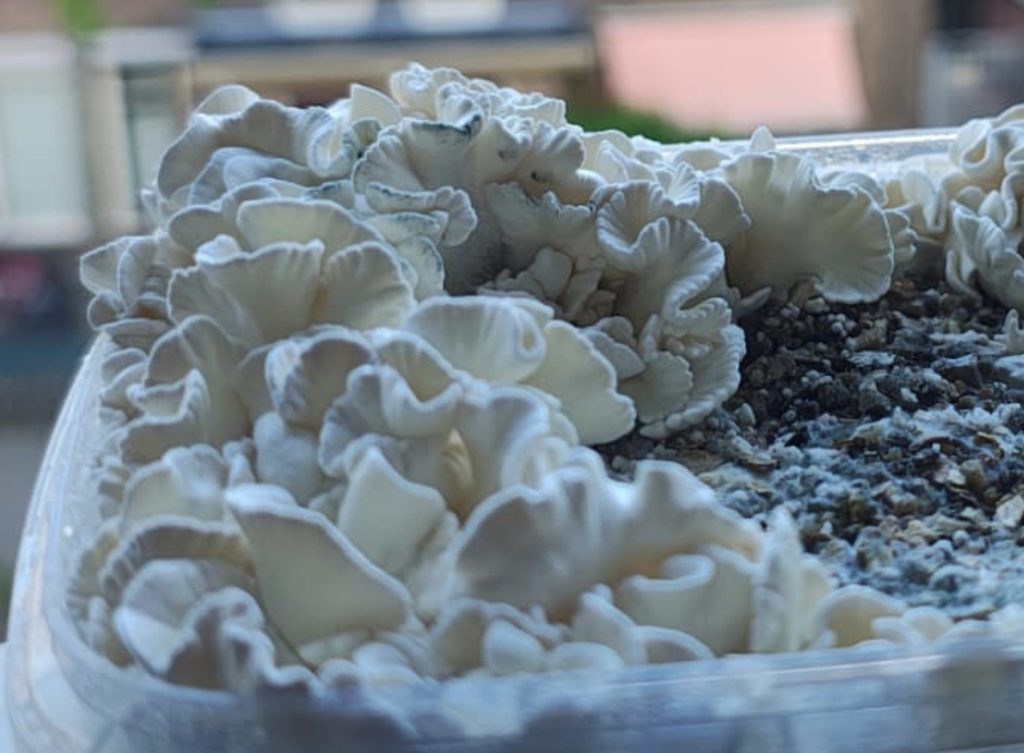
A stem. A cap. Maybe a veil breaking before harvest.
Waikiki Waves throws all of that out the window.
The first time I grew this strain, I genuinely wondered whether something had gone wrong. Instead of tiny mushrooms emerging from the substrate, I watched strange white spikes begin pushing their way through the surface. They looked more like miniature antlers than mushrooms.
A few weeks later, those same spikes had transformed into dense, ruffled formations unlike anything I had ever grown before.
If you’re used to Cubensis strains such as Golden Teacher or McKennaii, Waikiki Waves is a completely different experience.
What Are Waikiki Waves?
Waikiki Waves is a Psilocybe Anoi hybrid known for producing dense branching fruiting bodies rather than the familiar cap-and-stem mushrooms seen in most Cubensis varieties.
At first glance, it barely looks like a mushroom at all. Instead of developing stems, caps and gills, the fruiting body grows through repeated branching, folding and ruffling, creating structures that resemble ocean coral or underwater reef formations.

What’s particularly fascinating is that coral-shaped fungi have evolved multiple times throughout nature. Species such as Hericium, Ramaria and Clavulina all developed similar branching structures despite belonging to different fungal families. This is a classic example of convergent evolution, where completely unrelated organisms arrive at similar solutions because the shape offers practical advantages.
Much like tree roots, blood vessels and coral reefs, the repeated branching creates enormous surface area from a relatively small amount of tissue. Scientists believe these unusual forms emerge when the developmental signals that normally produce stems and caps are altered through mutation, hybridisation or selective breeding.
The result is one of the most visually unique psychedelic mushroom strains currently available.
From Pins to Coral: Watching Waikiki Waves Grow
The first stage of growth is where most first-time growers become confused.
Unlike Cubensis pins, which already resemble miniature mushrooms, Waikiki Waves begin as tiny white spikes emerging from the substrate.
They can look like fingers, antlers, tiny stalagmites, or even little pieces of coral.
The first time I saw them, I genuinely wasn’t sure whether the growth was progressing normally.

Over the following days those spikes begin to branch and widen. New growth emerges from existing growth. The tips slowly start folding outward and developing delicate ruffles.

This is the stage where Waikiki Waves begins to reveal its true character.
As the growth matures, the clusters become increasingly dense. The folds become more pronounced and the structure starts resembling underwater coral formations.
Unlike Cubensis mushrooms, which mostly become larger versions of themselves, Waikiki Waves constantly changes shape throughout its life cycle.
Why Do Waikiki Waves Grow on the Sides?
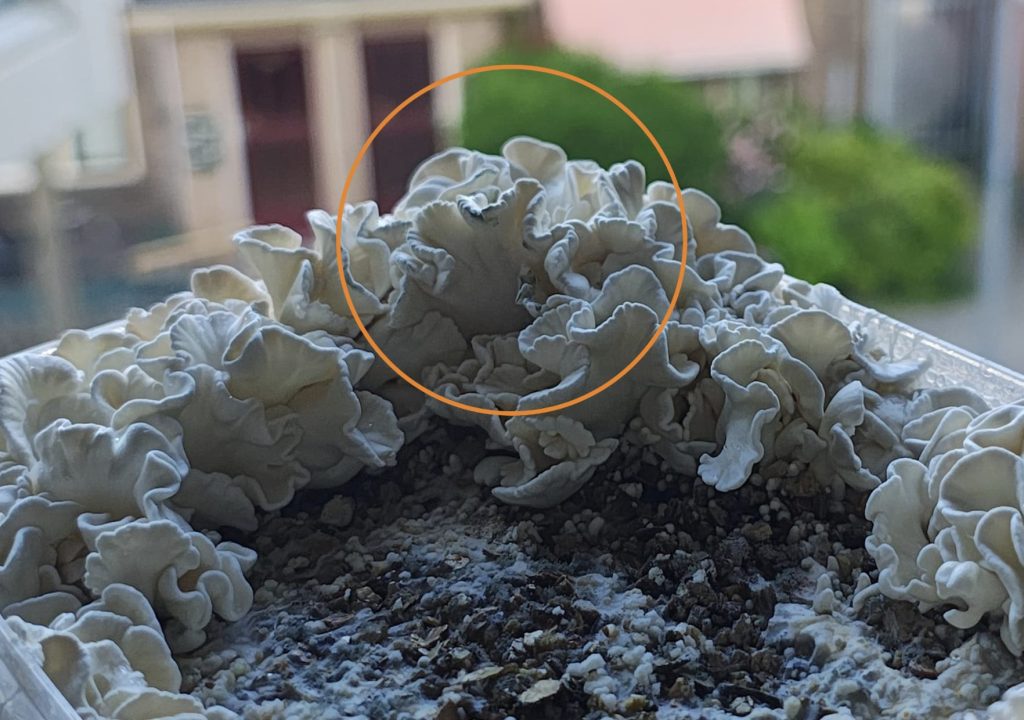
One thing I noticed repeatedly during cultivation was how often the clusters developed along the sides of the container.
This isn’t necessarily a problem. In fact, it appears to be quite common.
Because the clusters remain relatively short and dense, they can easily find their way into small gaps and crevices around the edge of the grow kit.
Many growers are surprised to discover that some of the largest and healthiest clusters appear against the walls of the container rather than directly on top of the substrate.
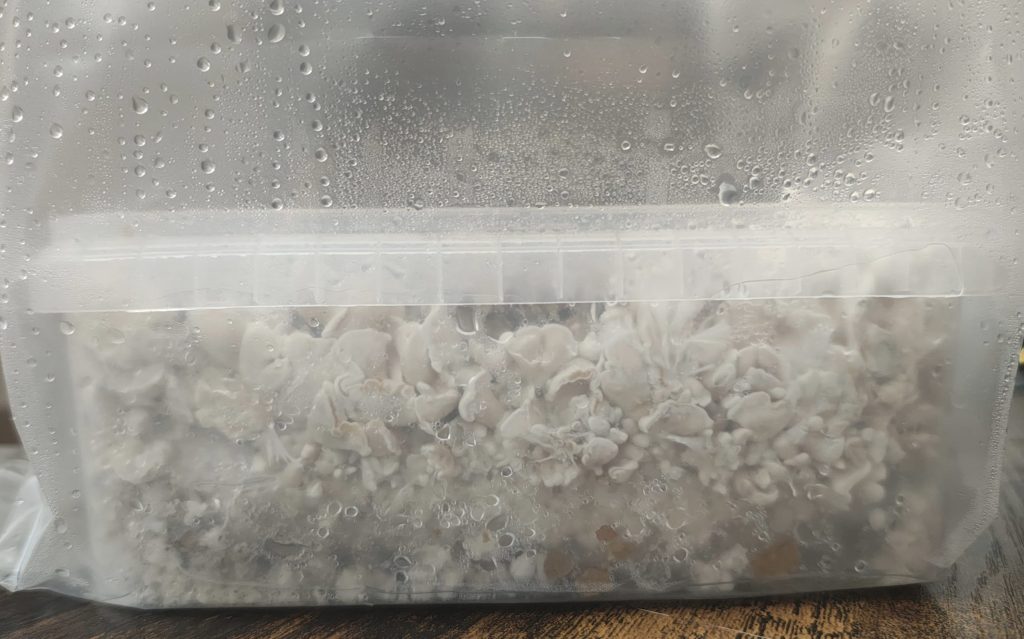
However, mushrooms growing underneath the substrate or becoming trapped against the sides should eventually be removed. Left in place, they can begin to deteriorate and potentially contribute to rot.
If you decide to remove side growth, make sure everything is as clean and sterile as possible. Wear gloves, wash your hands thoroughly and avoid disturbing the substrate more than necessary.
Interestingly, I found that placing the grow kit inside the white cardboard box it arrived in helped encourage more upward growth by directing the mushrooms toward the available light.
Knowing When It’s Ready
This is probably the biggest challenge for first-time Waikiki Waves growers.
With Cubensis mushrooms, there are obvious signs of maturity. You can watch the veil stretch and eventually break beneath the cap.
Waikiki Waves doesn’t offer those visual cues.
Instead, you learn to read the cluster itself.
As maturity approaches, growth begins slowing noticeably. The ruffles become more defined and the structure appears fully formed. Day-to-day changes become less dramatic.
Another useful indicator is bruising.
When mature clusters are touched or handled, they often bruise blue very easily. This blue coloration occurs when the mushroom tissue is damaged and is especially noticeable with this strain.
The first flush can feel like guesswork.
By the second flush, however, it becomes much easier to recognise when the clusters have finished developing and are ready to harvest.

Harvesting Waikiki Waves
One thing that surprised me was how easily the clusters separated from the substrate.
Before harvesting, I recommend thoroughly cleaning your workspace and wearing gloves. Although I didn’t wear gloves during part of my first harvest, it’s definitely the better approach if you want to reduce contamination and extend the life of the grow kit.
The clusters can usually be removed carefully by hand or with a sterile knife.
What makes harvesting easier is that the mushroom tissue feels completely different from the substrate.
The substrate feels grainy and slightly rough, almost like tiny pieces of lightweight foam. The mushroom itself feels soft, flexible and slightly rubbery.
Even though both are white, they become surprisingly easy to distinguish once you start harvesting.

Drying Waikiki Waves
Drying Waikiki Waves is remarkably straightforward.
Before drying, I recommend gently pulling apart the clusters as much as possible. The branching formations can trap small pockets of moisture, and separating them allows air to reach every surface.
This process often causes blue bruising, but that’s completely normal.
My preferred setup is simple.
A tea towel underneath, a layer of paper towel on top, and the mushrooms spread evenly across the surface.
If the room receives a lot of daylight, I’ll loosely cover everything with a second tea towel.
Because the tissue is so thin and delicate, Waikiki Waves dry significantly faster than many traditional mushroom varieties. In many cases, a dehydrator isn’t even necessary.
What Do Waikiki Waves Feel Like?
Waikiki Waves is often considered a relatively potent strain, with many users comparing its overall strength to McKennaii.
The character of the experience, however, tends to be quite different.
Rather than pulling you deep into philosophical thoughts or intense introspection, Waikiki Waves is often described as highly sensory and euphoric. Music sounds richer, colours appear brighter, and everyday activities can suddenly become surprisingly enjoyable.
Many users report a warm body high, frequent laughter, tingling sensations and a stronger appreciation for movement, music and nature.
Whether you’re hiking through a forest, dancing to your favourite music or simply spending time outdoors, Waikiki Waves tends to encourage presence and enjoyment of the moment.

The Finished Product
Once dried, Waikiki Waves become incredibly light and crisp.
The branching appearance remains visible, creating one of the most distinctive dried mushroom products I’ve ever seen.
In fact, the dried clusters often resemble popcorn more than mushrooms.
For storage, an airtight jar with silica gel or a vacuum-sealed bag works well.
Personally, I prefer grinding them into a fine powder and making chocolates. It’s an easy way to portion them, mask the flavour and make use of the delicate dried material.
 Download Waikiki Waves Grow Kit Instructions (PDF)
Final Thoughts
Waikiki Waves isn’t just another mushroom strain.
It grows differently, looks different, harvests differently and even dries differently.
For growers accustomed to traditional Cubensis varieties, the first flush can feel unfamiliar. But that’s exactly what makes it so rewarding.
Watching tiny white spikes transform into intricate branching formations is one of the most fascinating cultivation experiences I’ve had.
If you’re looking for a grow that genuinely feels different from the standard mushroom kit experience, Waikiki Waves is absolutely worth exploring.
Ready to Grow Waikiki Waves?
Waikiki Waves is one of the most visually striking strains available — producing stunning coral-like formations that look nothing like a traditional mushroom. Whether you’re a first-time grower or an experienced cultivator looking for something different, it’s a fascinating grow from start to finish.
✅ Shop the Waikiki Waves Grow Kit
🔥 Shop Magic Mushroom Cultivation Heat Mat
Follow Microdose Bros
Cultivation guides, harvest photos, growing tips, and behind-the-scenes content — find it all on our socials:
📸 Instagram 📘 Facebook 🎵 TikTok ▶️ YouTube
Related Reading


